[two_third]
 Petition Text
To the Honorable Joseph Pitts, co-chair of the Tom Lantos Human Rights Comission:
We urge you to, with urgency, speak out about the case of U.S. permanent resident Surat Singh Khalsa for the following reasons and in the following manner:
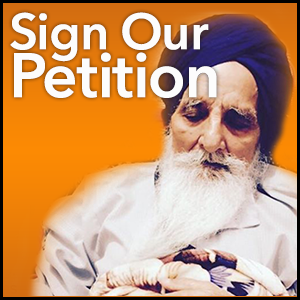
– Surat Singh Khalsa, a resident of Lathrop, CA, is an 82-year-old Sikh who was born in in the village of Hassanpur, Ludhiana district, State of Punjab, India. He became a permanent resident of the U.S. in 1990. His five children are all U.S. citizens.
– Khalsa began a hunger-strike on January 16, 2015 in his village in Punjab to demand release of political prisoners in India who have served their sentences, are eligible for release, but remain unjustly imprisoned without lawful basis.
– Khalsa and his family are facing politically-motivated persecution for his peaceful protest. He and his son, Ravinderjit Singh Gogi, were both arrested on February 26 and indefinitely held by police for two months before being released with all charges dropped. Khalsa was held at Ludhiana Civil Hospital and force-fed for 56 days (in an inhumane method condemned by India’s oldest civil rights group, People’s Union for Civil Liberties, that involved stitching a feeding-tube to his forehead) while Gogi was imprisoned at Ludhiana Jail, never arraigned, and was tortured in custody.
– Most of the political prisoners on whose behalf Khalsa is hunger-striking were arrested during the 1980s and 1990s for protesting events like the Indian State’s invasion of the Sikh Golden Temple in Amritsar, Punjab, the 1984 Sikh Genocide sponsored by the ruling Congress Party, and the ensuing decade of death squads that systematically “disappeared” tens of thousands of Sikhs.
– Khalsa’s decision to hunger-strike directly connects to his decision to emigrate from India. A former government schoolteacher in India, he quit his job in June 1984 in disgust over India’s invasion of the Golden Temple, which left thousands of Sikh pilgrims dead. That November, the country’s ruling Congress Party organized a genocide against Sikhs, centering in New Delhi and emanating outwards to other regions of the subcontinent. Members of Parliament, the city government, and party officials openly participated in mass killings of Sikhs in the streets at broad daylight. Khalsa began organizing protest rallies, was injured in 1986 when police opened fire on unarmed protesters outside the Punjab Legislative Assembly, and immigrated to the U.S. in 1988.
– On April 15, seven U.S. representatives from California (Jeff Denham, John Garamendi, Mike Honda, Zoe Lofgren, Tom McClintock, Jerry McNerney, and Patrick Meehan) appealed to the State Department to assist both Gogi and Khalsa. As a result, Khalsa was freed from police custody on April 23. Gogi was freed on April 27.
– Indian police continue to harass Khalsa and his family during their sojourn in Punjab. His family reports that Khalsa, though freed from police custody, is under virtual house arrest as over a dozen police surround their house, hundreds ring their village, and family members are followed when they leave. Furthermore, Gogi stated on May 4 in a formal communication to Punjab’s Chief Minister: “I have a strong feeling that I am at an extreme risk of being picked up again and falsely charged with even more severe charges…. I am very much concerned as my life is in danger.”
Conclusion —
– Considering the deplorable treatment and even torture of U.S. citizens and permanent residents who are peacefully sojourning in India and yet nevertheless face unprovoked, unjust, and even unlawful harassment by Indian authorities; and
– Considering that Khalsa is engaged in a peaceful and democratic form of protest that is a time-honored tradition within India as well as throughout the world; and
– Considering that, due to the intimate nature of the relationship between India and United States, it is fitting to urge our friends to embrace democratic attitudes and policies, especially including encouraging rather than suppressing peaceful dissent as well as respecting the rule of law by freeing prisoners who have served their sentences;
Therefore, So that Surat Singh Khalsa’s life is not given in vain, we petition you to speak out in one or more of the following ways:
1) Deliver formal remarks as an elected official to your legislative body;
2) Join a letter to the U.S. State Department asking Secretary John Kerry to publicly appeal on Surat Singh Khalsa’s behalf;
3) Introduce a resolution in the United States Congress recognizing as state-sponsored the 1984 Sikh Genocide that sparked Khalsa’s hunger-strike.
[/two_third]
[one_third_last][emailpetition id=”1″][/one_third_last]